

Project Overview
Primo Posto CY is a construction and property development firm headquartered in Limassol, Cyprus, operating since 1999 across residential, commercial, corporate, and industrial projects. The company operates across two distinct business lines — bespoke construction services for client-supplied plans and drawings, and proprietary development projects available for purchase — each serving a different buyer type and requiring a different content presentation on the site. With over 30 years of completed projects across Cyprus, the business needed a website that could function as a credible portfolio reference for both incoming construction clients and prospective buyers evaluating development opportunities.
Business Goals
The client needed a professional website built from a Figma design file that could organize a growing portfolio of completed and ongoing projects under a clear two-category structure, while presenting the company’s three-decade track record in a way that immediately conveyed authority to an audience comparing established Cypriot developers. The portfolio was the central functional requirement — rather than a static gallery, each project needed its own dedicated entry with structured content fields, making it independently searchable and extensible as new projects were added over time without requiring a developer for each update.
Website Strategy
The site architecture was planned around two primary visitor types: someone who owns land or drawings and is evaluating a construction partner, and someone in the market for a property and evaluating Primo Posto’s development portfolio. The navigation reflects this directly — a single Our Projects section branching into Development and Constructions sub-pages, each pulling from the same ACF-powered project post type but filtered by category. This allows both audiences to reach relevant portfolio entries in a single click from the homepage without landing on an undifferentiated project grid. The homepage itself guides visitors through the company’s credentials in sequence: heritage and positioning, services, latest projects, differentiation, values, and contact.
Design & Development Process
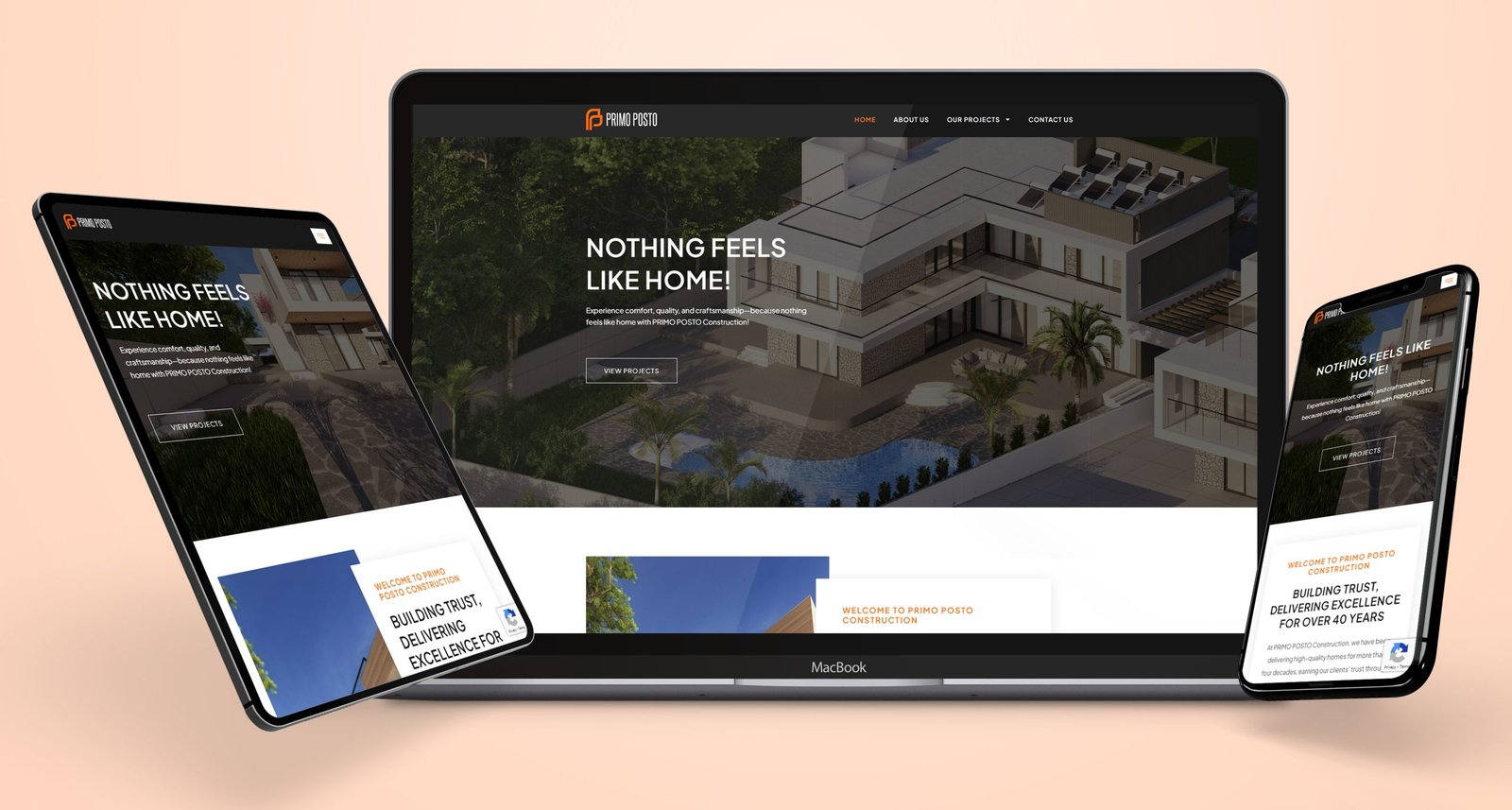
The Figma design arrived with a strong visual identity suited to a premium property developer — clean, high-contrast, photography-led sections with generous white space and restrained typographic choices that let the project imagery carry the page. Translating this to Astra and Elementor required careful attention to section background handling, heading hierarchy, and the spacing rhythm between sections, which in property development websites tends to carry as much brand weight as the content itself.
The Astra theme was selected as the foundation for its performance-first architecture and clean compatibility with Elementor’s advanced breakpoint system. Astra’s global style controls kept typography and spacing consistent across the project archive page, individual project template, and homepage sections built independently in Elementor — preventing the visual drift between page types that commonly appears in large Elementor builds without a disciplined base theme.
The homepage portfolio section features a filterable tab system — All, Constructions, Development — allowing visitors to sort the latest projects by category without leaving the page, built using Elementor’s loop grid connected to the ACF project post type and filtered by the two registered taxonomies.
Technical Implementation
ACF was used to register a custom post type for projects, with structured custom fields capturing all property-specific data for each entry: project name, status (Completed, In Progress), category (Constructions or Development), location, project description, and a dedicated gallery field for drone and on-site photography. This data structure allowed the client’s team to add and update project entries entirely through the WordPress admin without touching any page builder or template code — a critical requirement for a company with an active and growing project pipeline.
A custom single-page template was built for the project post type in Elementor using the theme builder, pulling ACF field values dynamically so each project page renders with the same consistent layout — status badge, location, description, and photography gallery — regardless of how much content is available for a given entry. This prevents layout inconsistencies between projects with extensive photography and those with a single hero image.
The homepage embeds a YouTube video in the hero section beneath the opening headline, configured with custom facade loading to prevent the YouTube embed script from loading on page entry and impacting initial load time. The animated stats counters — Years of Experience and Projects Completed — use scroll-triggered Elementor number widgets that activate as the visitor reaches that section, adding a dynamic quality to what would otherwise be static figures.
User Experience Improvements
The four-stage How We Work section — Concept, Design, Development, and a fourth closing stage — translates a complex multi-month construction or development engagement into a digestible process overview for clients who are evaluating the firm without prior experience commissioning construction work. Presenting this sequence as a numbered visual flow, rather than a paragraph of text, reduces the perceived complexity of engagement without underselling the technical depth of what the company delivers. The Mission, Vision, and Values section that follows reinforces the company’s operating philosophy for clients comparing multiple developers, giving Primo Posto a documented set of principles rather than just a service description.
Performance Optimization
Astra’s lightweight base kept the per-page asset load low despite the image-heavy nature of a property portfolio site. External CSS print method was configured at the Elementor level to prevent render-blocking styles, and Google Fonts were set to font-display: swap to eliminate invisible text during font loading. Project photography — including drone aerial images — was served in optimized formats to keep the project archive and individual project pages loading efficiently despite the high resolution the photography required.
Mobile Optimization
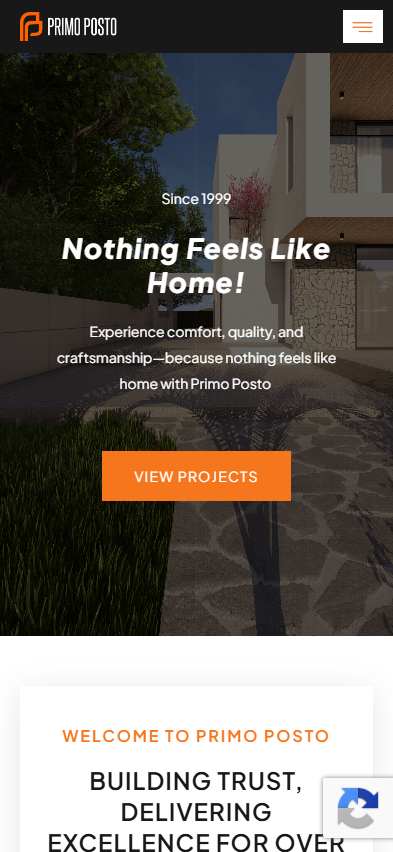
Elementor’s additional custom breakpoints feature was used to tune the services grid, project portfolio cards, and the How We Work step layout at tablet-width independently from desktop, avoiding the default two-column-to-single-column collapse that loses the structural clarity of the step sequence on mid-range screens. The filterable portfolio tab system was tested across touch devices to confirm tap behavior on the category filter labels matched the hover interaction expected on desktop.
Conversion Optimization
For a property developer, the conversion goal splits along the same two-path structure as the navigation: a construction enquiry from a client with plans or land, or a purchase enquiry from a buyer interested in a specific development project. Both paths end at the same Contact Us form and Limassol office details, but the site is structured so that each audience type reaches that contact point after engaging with the specific content most relevant to their decision — construction clients through the Constructions portfolio, buyers through the Development portfolio. The “View Projects” CTA in the hero section routes both audiences directly to the portfolio archive, where the category filter does the segmentation work without requiring separate landing pages.
Final Outcome
The completed website gives Primo Posto CY a structured, portfolio-led digital presence that accurately represents the company’s 30-year track record across both business lines. The ACF-powered project post type gives the client a scalable, self-managed content structure for the portfolio as new projects are completed and added, while the Figma design was delivered without visual compromise across all breakpoints.
Conclusion
This Figma to WordPress development project for Primo Posto CY demonstrates how ACF custom post types and a well-built Elementor theme builder template can give a property development company a portfolio that grows with the business. The filterable project grid, structured per-project fields, and clean Astra and Elementor foundation ensure the site remains maintainable and visually consistent long after launch.